
UK Work-Based Immigration Inquiry 2026 | Employer Impact
Home Affairs Committee inquiry places Skilled Worker sponsorship, domestic recruitment and long-term workforce planning under scrutiny.
The UK's approach to work-based immigration is facing renewed parliamentary examination, raising important questions for employers, multinational organisations and businesses that depend on international talent.
On 15 September 2026, the House of Commons Home Affairs Committee announced a new inquiry into work-based immigration, focusing on the effectiveness of existing immigration policies, the role of overseas recruitment and the relationship between immigration and domestic workforce development.
The inquiry represents an important development in the continuing debate about how the United Kingdom should balance economic growth, access to international skills and investment in its domestic workforce.
For businesses operating in an increasingly competitive labour market, the inquiry raises wider questions about the future of employer sponsorship, workforce planning and the availability of immigration routes for skilled overseas workers.
At ICS & Partners, we recognise that immigration is not simply an administrative requirement. For many organisations, it forms an important component of workforce planning, business continuity, international recruitment and long-term growth.
Why has Parliament launched this inquiry?
The Home Affairs Committee is examining whether the UK's existing work-based immigration framework is achieving its intended objectives.
A central issue is whether the current Skilled Worker visa arrangements provide an appropriate balance between meeting genuine labour market needs and encouraging employers to recruit, train and develop workers already available within the UK.
The inquiry follows the Committee's Your Voice on Immigration initiative, which brought together members of the public to consider the competing priorities surrounding work-related migration.
Participants identified the importance of prioritising domestic recruitment and training while also recognising the contribution of overseas workers and the need for fair treatment, appropriate integration and effective immigration policies.
These findings have informed the Committee's examination of the wider work migration system.
The future of the Skilled Worker visa
One of the principal areas under consideration is the effectiveness of the Skilled Worker visa route. The route remains an important mechanism through which eligible UK employers can recruit international workers for qualifying positions.
However, the wider policy direction increasingly raises questions about the relationship between employer sponsorship and domestic skills development.
The Committee is examining whether the Government's approach is likely to reduce reliance on overseas recruitment while encouraging greater investment in the domestic workforce.
For employers, this raises several important considerations:
-
How future immigration policies may affect access to international workers.
-
Whether occupation eligibility could change in response to labour market priorities.
-
How workforce training and domestic recruitment may influence future policy decisions.
-
The importance of forecasting immigration requirements alongside business growth.
-
How employers can maintain recruitment continuity when immigration policies change.
The inquiry does not itself amend the Immigration Rules. Nevertheless, its findings may inform future recommendations and policy discussions.
Which occupations should qualify for work visas?
A further issue under examination concerns how decisions are made about which occupations are eligible for work-based immigration routes. Occupation eligibility is particularly important for employers operating in sectors where specialist skills, professional qualifications or recruitment shortages create demand for overseas workers.
Businesses in technology, engineering, healthcare, manufacturing, financial services and other sectors may encounter different workforce challenges depending on the availability of domestic talent and the requirements of individual roles. A more evidence-led approach to occupation eligibility could have implications for employers whose recruitment strategies depend on access to particular categories of international workers.
Organisations should therefore consider how changes in occupation eligibility, salary requirements and immigration policy could affect their future recruitment needs. This does not mean that employers must immediately change their recruitment arrangements because of the parliamentary inquiry. Rather, it reinforces the value of reviewing immigration dependencies and maintaining flexibility in workforce planning.
Immigration Strategy and Domestic Workforce Development
One of the broader themes emerging from the inquiry is the relationship between immigration and workforce development. International recruitment and domestic skills investment need not be treated as mutually exclusive.
For many employers, overseas recruitment addresses immediate operational requirements while domestic training, apprenticeships and professional development contribute to longer-term workforce capacity.
The appropriate balance will depend on the organisation, industry, geographic location and availability of relevant skills. For leadership teams and HR professionals, this creates an opportunity to examine workforce requirements through a more integrated approach.
A structured workforce strategy may consider:
Current Workforce Requirements
Understanding existing recruitment challenges, specialist skills requirements and positions that may be difficult to fill domestically.
Future Talent Demand
Forecasting anticipated staffing requirements arising from business expansion, operational changes and investment.
Domestic Recruitment and Development
Assessing opportunities to strengthen local recruitment, employee training, retention and workforce development.
International Recruitment
Identifying where overseas recruitment remains necessary and assessing the immigration routes available for eligible workers.
Immigration Compliance and Risk
Reviewing sponsorship obligations, immigration eligibility and the potential operational consequences of future regulatory changes.
By considering these matters together, organisations may be better positioned to respond to developments in UK immigration policy.
What does the inquiry mean for UK employers?
Although the Committee's investigation does not introduce immediate changes to immigration legislation or sponsorship requirements, it highlights several areas that employers should monitor.
1. Greater Importance of Workforce Planning
Businesses that depend on international recruitment should consider whether their existing workforce plans adequately address changes in immigration eligibility and recruitment requirements.
A clearer understanding of future staffing needs can help organisations identify potential challenges before they affect operational delivery.
2. Reviewing Reliance on Overseas Recruitment
Employers may benefit from understanding the proportion of their workforce that depends on sponsored immigration routes and the extent to which particular roles rely on overseas recruitment.
This can support more informed decision-making concerning recruitment, employee retention and business continuity.
3. Monitoring Skilled Worker Policy Developments
Changes to eligible occupations, salary requirements and sponsorship conditions can affect recruitment plans and immigration expenditure.
Employers should ensure that immigration decisions are based on the Immigration Rules in force at the relevant time, rather than anticipated policy changes.
4. Strengthening Immigration Governance
Organisations holding sponsor licences must continue to comply with their existing sponsorship responsibilities.
Appropriate internal procedures, accurate records and clear responsibility for immigration matters remain important components of employer compliance.
5. Integrating Immigration Into Business Decisions
Immigration considerations may be relevant to expansion plans, investment decisions, international recruitment, organisational restructuring and the deployment of specialist employees.
Early consideration of these requirements can help reduce unexpected delays and operational uncertainty.
Implications for multinational businesses and international employers
For multinational organisations, the inquiry is relevant beyond individual UK visa applications. Businesses operating across multiple jurisdictions frequently need to coordinate recruitment, employee transfers, immigration compliance and workforce deployment.
The availability of UK immigration routes can influence decisions concerning where specialist employees are based, how international teams are structured and how businesses establish or expand their UK operations.
Where future immigration policies become more closely connected to domestic skills priorities, international employers may need to assess their UK workforce requirements against a broader range of commercial and regulatory considerations. This makes immigration planning an important part of corporate decision-making, particularly for organisations undertaking international expansion or managing cross-border talent.
A more strategic approach to corporate immigration
The parliamentary inquiry provides a timely opportunity for employers to consider how immigration is managed within their organisations. Rather than addressing immigration requirements only when a vacancy arises or an employee requires a visa, businesses may benefit from a more coordinated approach.
This can involve reviewing immigration requirements alongside recruitment planning, financial forecasting, compliance responsibilities and wider business objectives.
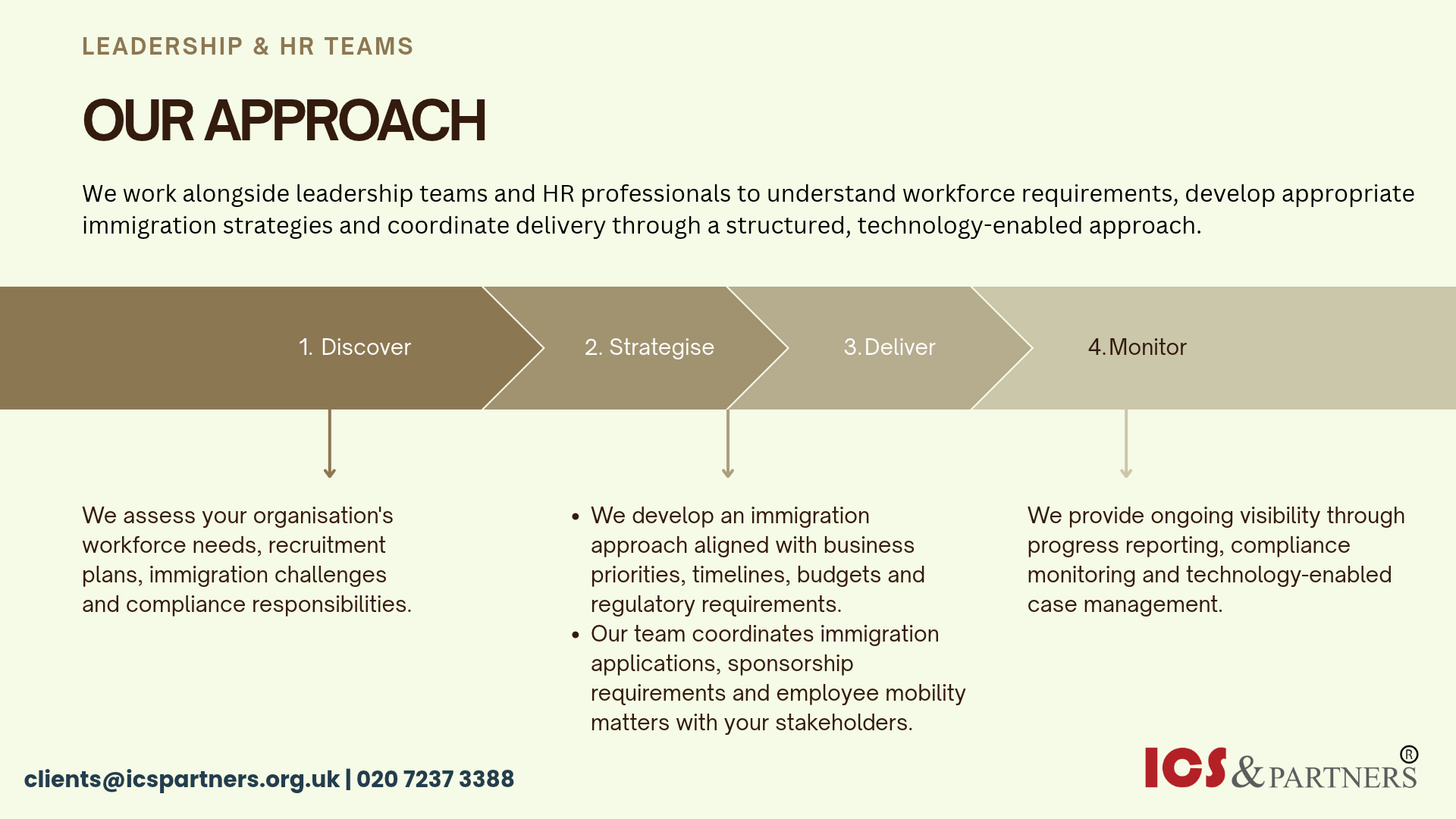
At ICS & Partners, our approach to corporate immigration recognises the connection between legal requirements and commercial priorities. We work with employers, leadership teams and HR professionals to assess immigration requirements, identify potential risks and develop practical approaches to managing international recruitment and workforce mobility.
Our work can include corporate immigration advisory, employer sponsorship, immigration compliance, workforce immigration planning and ongoing immigration programme support.
What happens next?
The Home Affairs Committee's written evidence submission period closed on 27 October 2026. The Committee may consider the evidence received, conduct further scrutiny and subsequently publish findings or recommendations.
Any recommendations arising from the inquiry would need to be distinguished from formal Government policy decisions and changes to the Immigration Rules. Employers should therefore continue to follow existing immigration requirements while monitoring developments that may affect future recruitment and sponsorship arrangements.
How ICS & Partners can support your organisation
Immigration policy developments can create uncertainty for employers, particularly where international recruitment is essential to business operations.
ICS & Partners works with businesses, multinational organisations and HR teams to provide immigration advice and strategic support aligned with their workforce requirements.
Our areas of support include:
-
Corporate Immigration Advisory — Assessing immigration routes, sponsorship requirements and employer obligations.
-
Immigration Strategy & Planning — Aligning immigration requirements with recruitment objectives and business growth.
-
Immigration Programme Management — Coordinating ongoing immigration matters, compliance requirements and workforce planning.
-
Employer Sponsorship & Compliance — Supporting organisations with sponsor licence responsibilities and immigration risk management.
-
Workforce Mobility Advisory — Assisting with immigration considerations arising from international recruitment, employee transfers and business expansion.
Planning Your Organisation's Immigration Requirements
As the UK continues to examine the relationship between immigration, skills and economic priorities, employers may benefit from reviewing how immigration requirements fit within their wider workforce strategy.
Speak with ICS & Partners to discuss your organisation's immigration requirements, workforce planning considerations and the potential implications of developments in UK work-based immigration policy.
Source and further reading
House of Commons Home Affairs Committee, New inquiry: Work-based immigration, published 15 September 2026.
Home Affairs Committee, Work-based immigration inquiry:
https://committees.parliament.uk/work/9997/workbased-immigration/
This article provides general information and commentary as at 3 November 2026. It does not constitute legal advice. Immigration requirements and Government policy may change, and organisations should obtain advice based on their particular circumstances.
Need immigration advice?
Speak with one of our specialists about your specific situation.
Book a Consultation